Tori-no-ichi 2026 in Asakusa: dates, access and tips
Tori-no-ichi, the rake fair at Otori Shrine near Asakusa, falls on Saturday November 7 and Thursday November 19 in 2026. Entry is free. Go after dark for the lanterns, the glittering kumade stalls and the hand-clapping when a rake is sold. The nearest station is Iriya, about 7 minutes on foot.
“I went a few years ago. Whatever you do, go at night and enjoy the lights and the sheer number of people.”
When is Tori-no-ichi 2026?
Two days only: Saturday, November 7 (ichi-no-tori, the first rooster day) and Thursday, November 19 (ni-no-tori, the second). The fair falls on the days of the rooster in November, so the dates change every year. Entry is free.
Where is it?
At Otori Shrine (鷲神社) and the neighboring Chokokuji temple in Senzoku 3-chome, Taito City — north of Senso-ji, on the edge of the old Asakusa district.
- Iriya Station (Hibiya Line): about 7 min on foot
- Asakusa Station (Tsukuba Express): about 8 min
- Tawaramachi Station (Ginza Line): about 15 min
There is no festival parking; take the train.
What happens at Tori-no-ichi?
People come to pray for good business and luck in the year ahead, and to buy a kumade — a bamboo rake decorated with masks, coins, rice and lucky charms, said to “rake in” fortune. It is often called the largest Tori-no-ichi in Japan, with around 150 kumade stalls and about 750 food stalls.
When someone buys a large rake, the sellers and buyer finish the deal with a rhythmic tejime hand-clap. You’ll hear it all around you — it is the sound of the festival.
When is the best time to go?
At night. Our author went a few years ago and has one piece of advice: go after dark for the lights and the crowds. The glowing kumade stalls are at their best then, and the narrow lanes are packed. If you dislike crowds, go earlier in the day, but you’ll miss most of the atmosphere.
Tips
- Expect to queue to pray at the shrine on the busiest evenings.
- Small kumade make a lightweight souvenir; the large ones are bought by businesses and can be very expensive.
- Bring cash for food stalls.
- Check torinoichi.jp shortly before you go for official times and any changes.
Combine it with
An evening walk at Senso-ji, where the main hall and pagoda are lit until about 11 p.m. See the Asakusa travel guide for more.
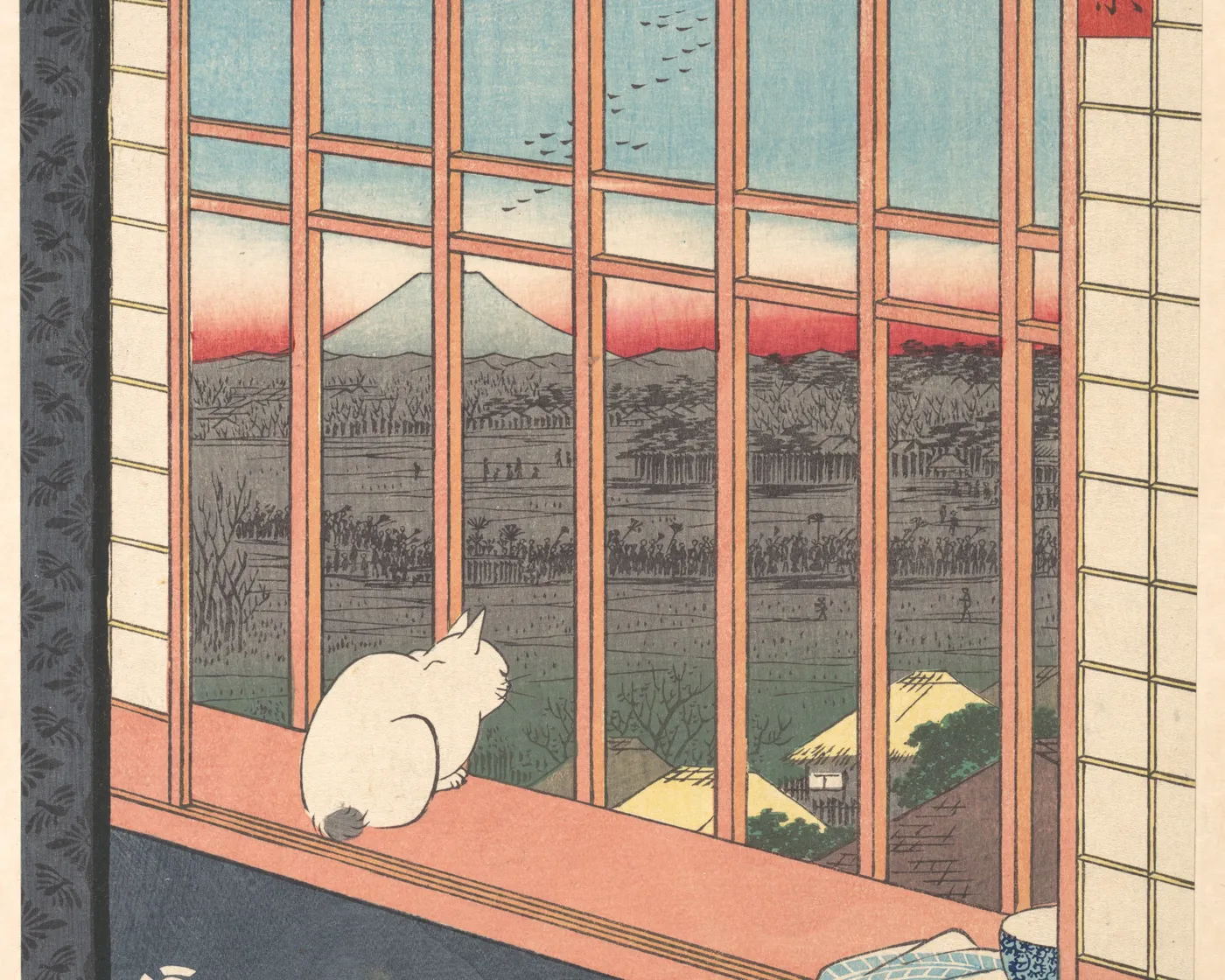
Header illustration: Utagawa Hiroshige, “Asakusa Rice Fields and Torinomachi Festival”, from One Hundred Famous Views of Edo, 1857. The Metropolitan Museum of Art, public domain.