Senso-ji Temple: when to go and what to see
Come in the quiet morning or after dark, when the main hall, pagoda and gates are lit until about 11 p.m. Entry is free. The main hall is open 6 a.m.–5 p.m. (from 6:30 a.m. October–March). The temple itself needs only about 20 minutes; it is a 5-minute walk from Asakusa Station.
Quick facts
- Main hall
- 6:00–17:00 (Oct–Mar from 6:30)
- Entry
- Free
- Light-up
- Sunset to about 23:00, every night
- From Asakusa Stn
- 5 min walk
- Time needed
- 20–30 min (temple only)
- Step-free
- Ginza Line Exit 1 has a street elevator; one step-free route down to Platform 1 (Tokyo Metro)
- Toilets
- Yes, incl. multi-purpose
“I like Senso-ji in the morning, when there are fewer people, and at night, when the lighting is beautiful.”
When is Senso-ji least crowded?
Early morning. I’m in Asakusa about once a week, and mornings are far calmer: you can stand in front of the main hall without being carried along by the crowd. By late morning Nakamise and the area under Hozomon fill up, and on weekends and festival days it stays that way until evening. For seasonal events here, see the Hagoita-ichi fair in December and hatsumode at New Year.
The main hall opens at 6 a.m. from April to September and 6:30 a.m. from October to March, and closes at 5 p.m. Entry is free.
Is Senso-ji worth visiting at night?
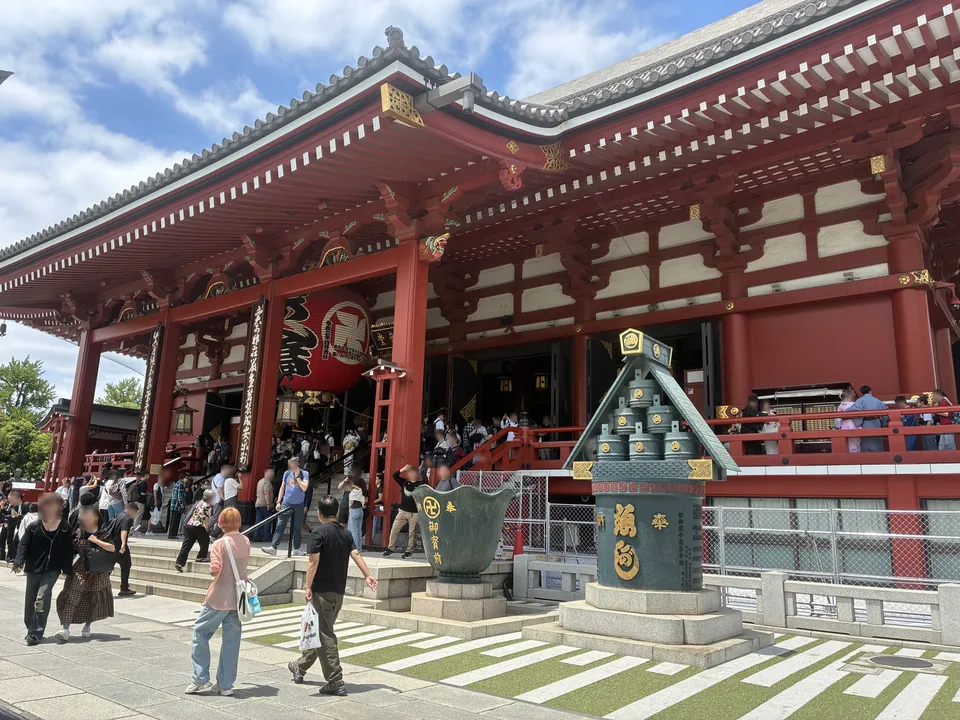
Yes — this is the other time I’d pick. The main hall, the five-story pagoda, Hozomon and Kaminarimon are lit up every night from sunset until about 11 p.m. The hall itself is closed by then, so you won’t see inside, but the buildings glow red against the dark sky and the crowds are gone. It is the easiest way to get a photo without hundreds of people in it.
What should you see?
- Kaminarimon — the “Thunder Gate” with the giant red lantern. Start here.
- Nakamise — the shopping street from Kaminarimon to the temple, about 90 shops.
- Hozomon — the inner gate, with huge straw sandals on its back side.
- The five-story pagoda — rebuilt in 1973.
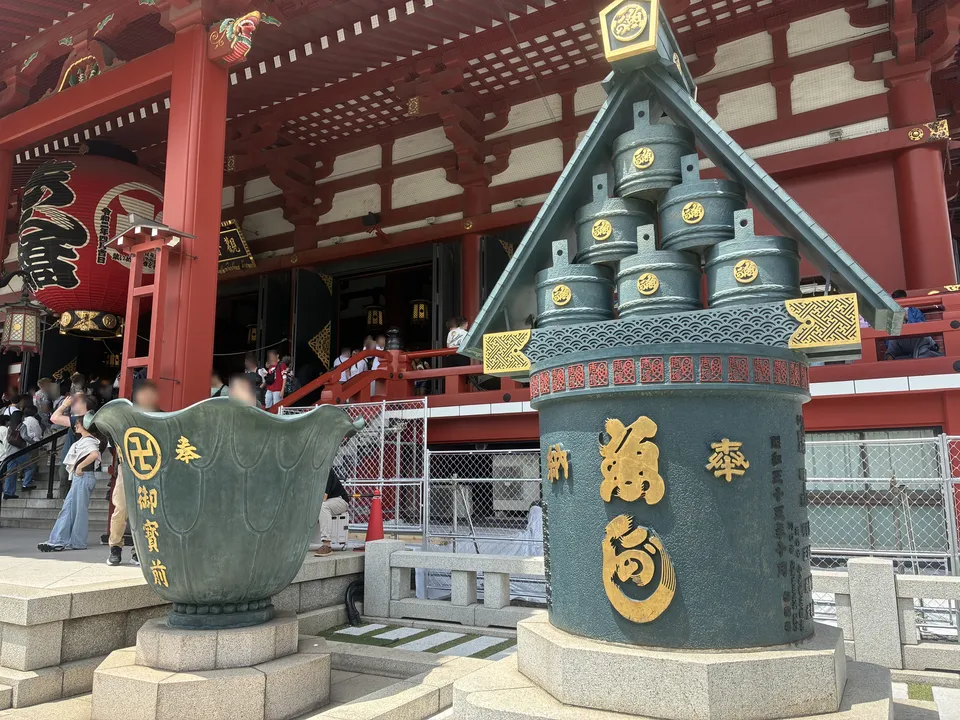
- The main hall — free to enter during opening hours.
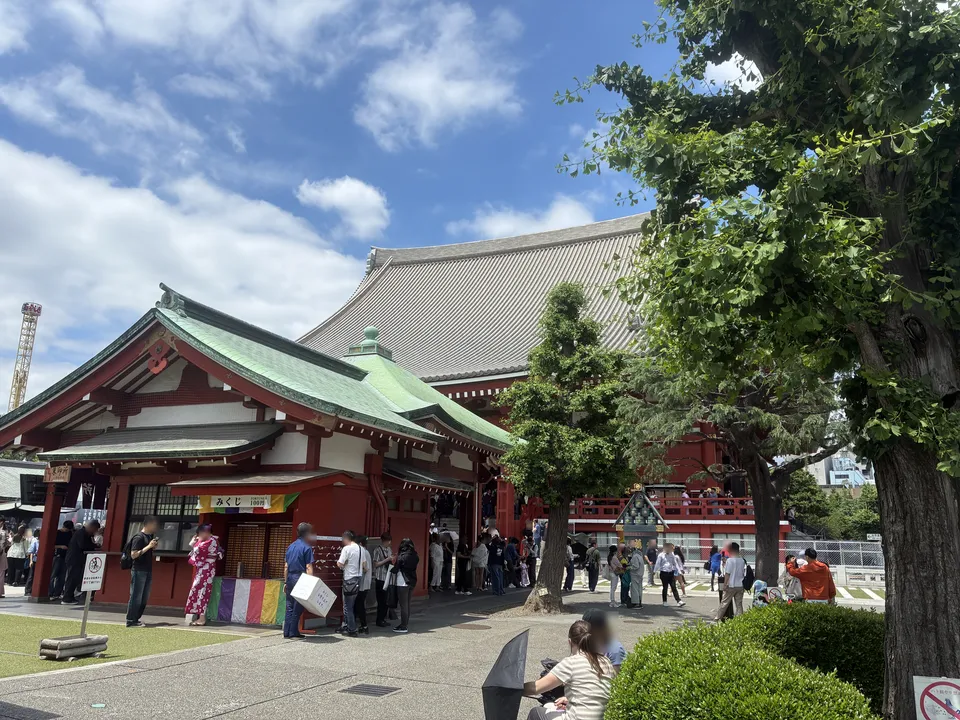
- Asakusa Shrine — right next to the main hall, home of the Sanja Matsuri in May.
- Nitenmon — the red east gate, a short walk east of the main hall. Built in 1649, it is one of the few early-Edo buildings left in the grounds and a National Important Cultural Property. The two guardian statues inside came from Kan’ei-ji in Ueno in 1957 (temple website).
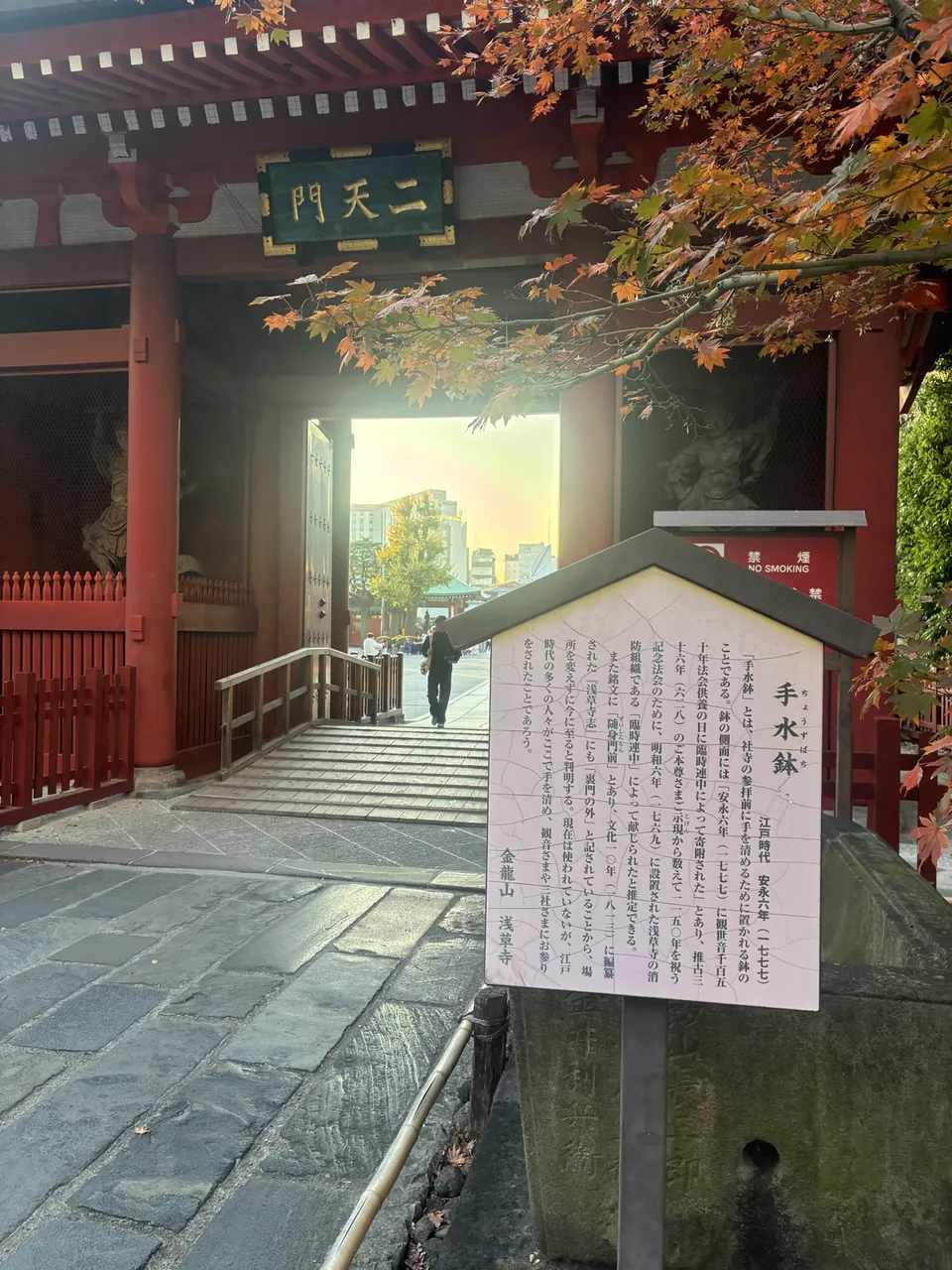 Nitenmon, Senso-ji, November 27, 2026.
What is Hozomon Gate?
Hozomon is the second gate, at the north end of Nakamise, and the last thing you walk through before the main hall. It was once called Niomon, after the two Nio guardian statues on its front side. The gate burned in the 1945 air raids; the current one, in steel and reinforced concrete, opened in 1964. It took the name Hozomon, “Treasure House Gate”, because its upper floor stores the temple’s scriptures and treasures. The upper floor isn’t open to visitors.
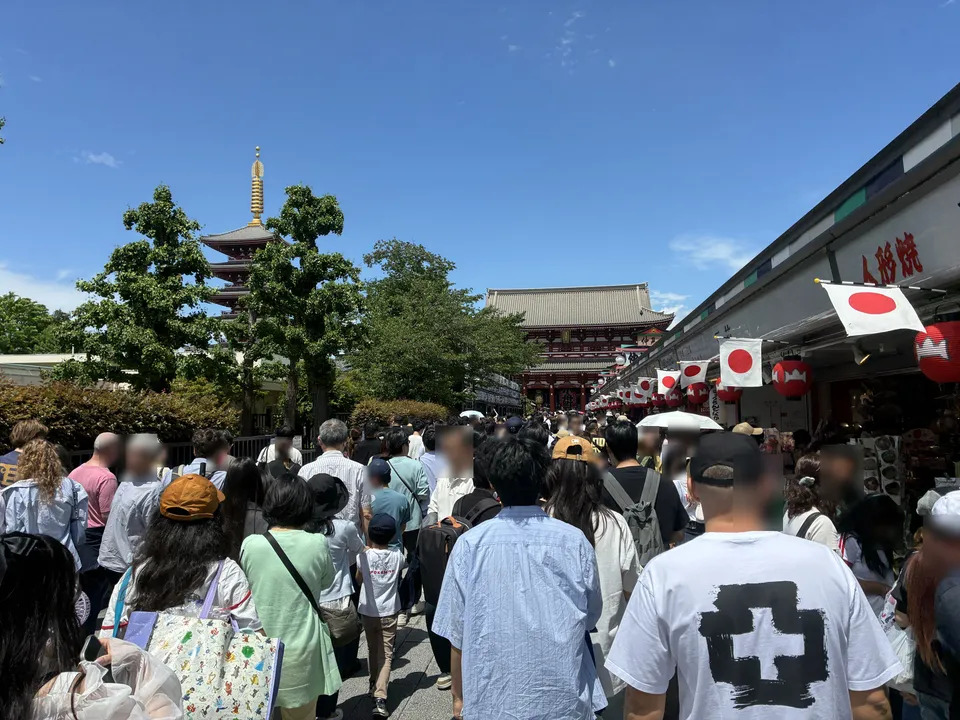 Nakamise and Hozomon, Asakusa, May 4, 2026.
What to look for:
- The Nio guardians — carved from Kiso cypress, about 5.45 m tall including their bases and roughly 1,000 kg each.
- The big red lantern — 3.75 m tall and 450 kg.
- The giant straw sandals (waraji) — on the back, facing the main hall: 4.5 m tall, 1.5 m wide and 500 kg. Turn around after you pass through or you’ll miss them.
The gate stands 21.7 m high.
Can you go inside the five-story pagoda?
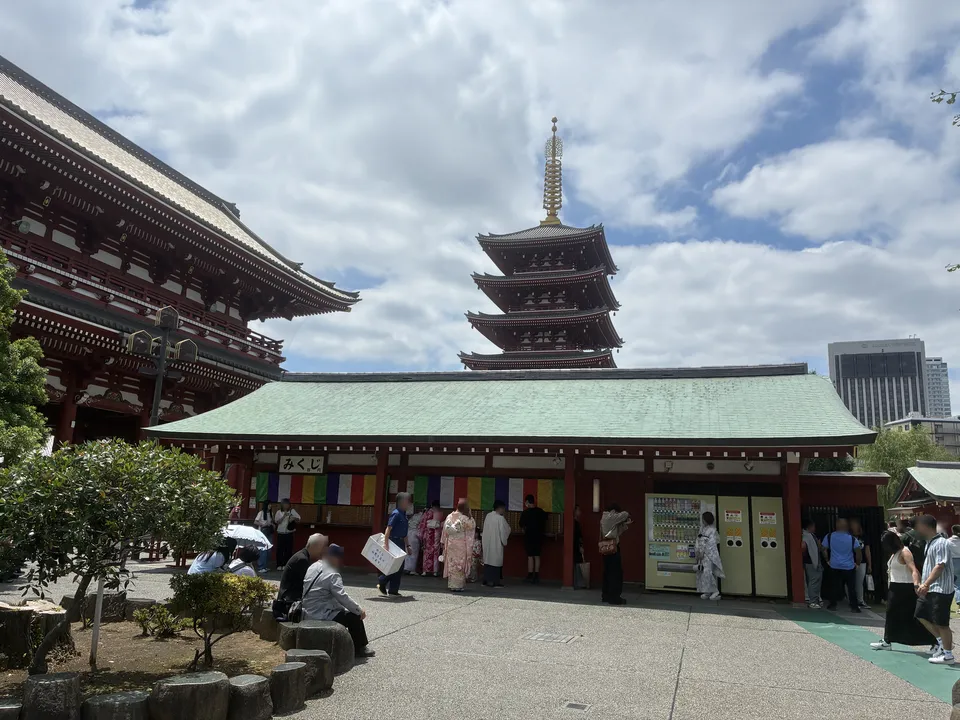
No. Senso-ji’s five-story pagoda is for viewing from the grounds only. Its top floor holds Buddhist relics received from Isurumuniya temple in Sri Lanka in 1966, and the hall at its base keeps memorial tablets; visits there are generally limited to families with tablets enshrined.
The current pagoda was rebuilt on November 1, 1973, in steel and reinforced concrete, and stands about 53 m from the ground. It replaces the one Tokugawa Iemitsu rebuilt in 1648, which burned in the air raid of March 10, 1945. Today’s sits southwest of the main hall, on your left as you come through Hozomon. It is part of the nightly light-up, so it’s worth a second look after dark.
Can you see a monkey show?
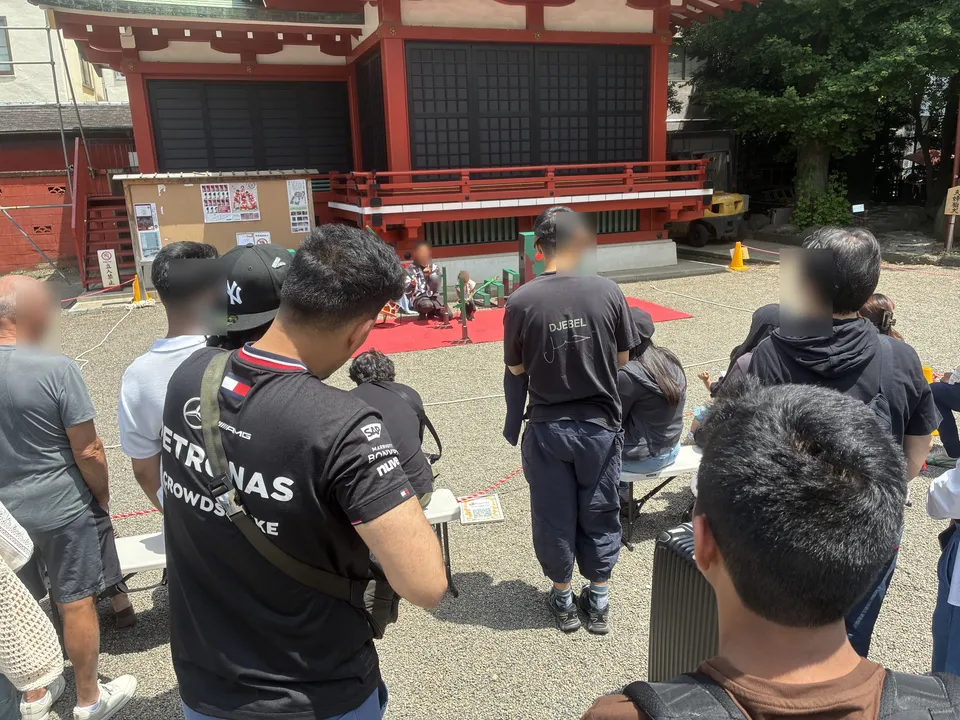
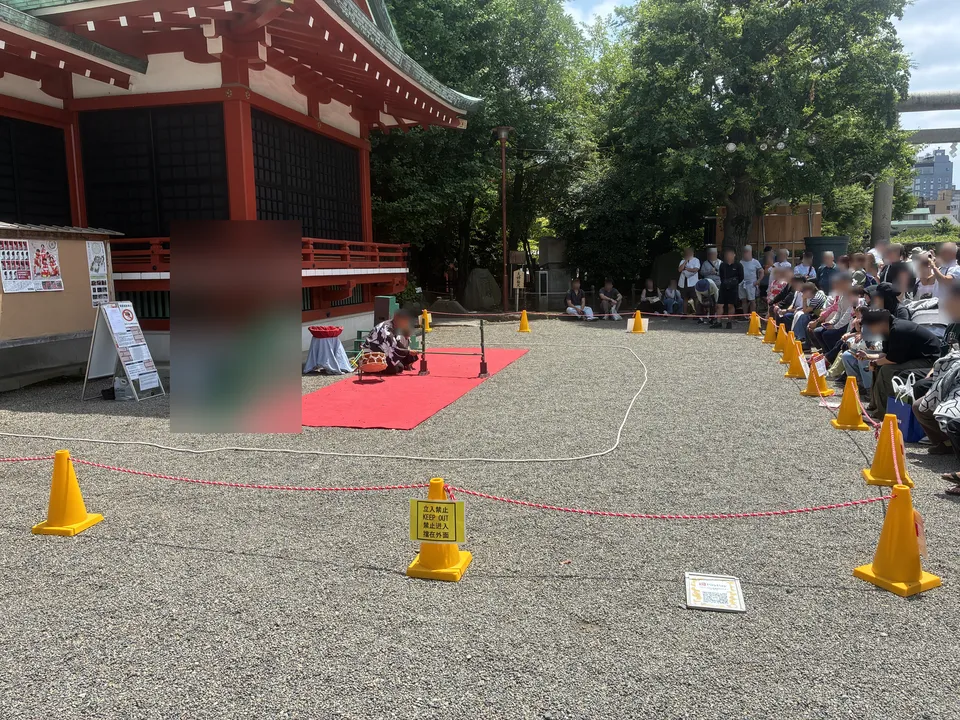
If you’re lucky, you can watch a monkey performance (saru-mawashi) in the temple grounds. A traditional street act where a performer works with a trained monkey, usually in a roped-off area on the gravel. It isn’t on a fixed daily schedule, so think of it as a bonus: if you see a crowd gathered around a red mat, stop and watch. Visitors sometimes catch one.
Is there anything free to try?
Yes — look for the small hut in the temple grounds where Ito En offers free tastings of its green tea. It’s a nice break between the gates and the main hall, and I recommend it.
How long do you need?
For the temple itself — Hozomon, the main hall and the pagoda — about 20 minutes is enough. Add Kaminarimon and a snack walk up Nakamise and you’re at roughly an hour. If you want a full half-day plan, follow my 2-hour Asakusa walking route.
Getting there
Senso-ji is about 5 minutes on foot from Asakusa Station (Ginza Line, Toei Asakusa Line and Tobu). Note that the Tsukuba Express “Asakusa” station is a separate station further west.
Nearby
Walk 5 minutes east to the Skytree view from Azuma Bridge, or head west to Hoppy Street and on to Kappabashi. For the big picture, start with the Asakusa travel guide; to visit in kimono, see the kimono rental comparison; to tour the area by rickshaw, see Asakusa rickshaw prices. For matcha gelato behind the temple, see matcha desserts in Asakusa.